Food & Drink

Save the Silver Fork!

Seattle Needs More Buttery Grits, Not More Safeway Gas Stations

Save the Silver Fork!

The Stranger

A CLASSIC Thermal coffee carafes, ’70s R&B, and community.

The first the owners of the Silver Fork diner heard about their imminent closure was from a customer. "What's up with that sign outside?" a patron asked server Malina Bash the week before last. "What sign?" replied Bash, the granddaughter of owners Larkin and Estella Potts.

It was one of those ubiquitous white "Notice of Proposed Land Use Action" signs. The restaurant is to be demolished, the sign says, and replaced by a Safeway gas station and convenience kiosk. The landlord confirmed that the property was being sold and the lease would not be renewed; the Potts family currently plans to close down the venerable Rainier Valley institution by the end of September.

"I'm gonna miss coming down here as much as you," Larkin Potts sighed when I told him how much my daughter and I would miss the place. The Pottses' daughter Margie Johnson, who's been running the restaurant since her mother's stroke, recently told the Seattle Times that she'd been thinking of closing the restaurant anyway, but she tells me she would put in another 15 years, even relocated. "I love this place," says Johnson. "I don't want to see it go down just like that."

Many of their loyal customers—including some of Seattle's most powerful politicians—feel the same way. Some community members are rallying to find the Silver Fork a new home, while others are hoping a grassroots campaign might save their favorite breakfast spot.

You have to look beyond the menu to fully understand the Silver Fork's vital role in the community, although the menu is a good place to start. Of course there are pancakes, eggs, bacon, and other breakfast standards, but you'll also find biscuits and gravy, chicken-fried steak, and the most authentic diner grits in the city: salty and creamy, with a pool of melted butter floating atop. More upscale restaurants sometimes reference or replicate such classic fare (at more upscale prices), but the Silver Fork is the real deal, like the many post–Great Migration Southern-style diners still found in urban neighborhoods throughout the Northeast and Midwest. As an East Coast transplant, from the moment I first walked through the doors more than a decade ago and smelled the bacon on the griddle, saw the thermal coffee carafes on the tables, and heard the 1970s-era R&B playing on the speakers, I instantly felt at home, even though my daughter and I were often the only two white faces in the restaurant.

There is no other place like the Silver Fork in Seattle. It has been a central gathering place for the city's African American community almost from the day it opened some 24 years ago. "It's a community restaurant, in the truest sense," says former King County executive Ron Sims, who can often be found at a back table with King County Council member Larry Gossett. Other regulars have included Norm Rice and Gary Locke, as well as sports figures like Bill Russell and Ken Griffey Jr. "But you left your title at the door," says Sims. "You were no better or worse than anybody else. Everybody was successful. Everybody lied about their kids."

On any given morning, you might find church groups, business leaders, high-school football coaches, and other community organizers conducting business over eggs and coffee and grits. The Silver Fork is the Rainier Club of Rainier Valley—the place where important business gets done. And everybody in the place is important.

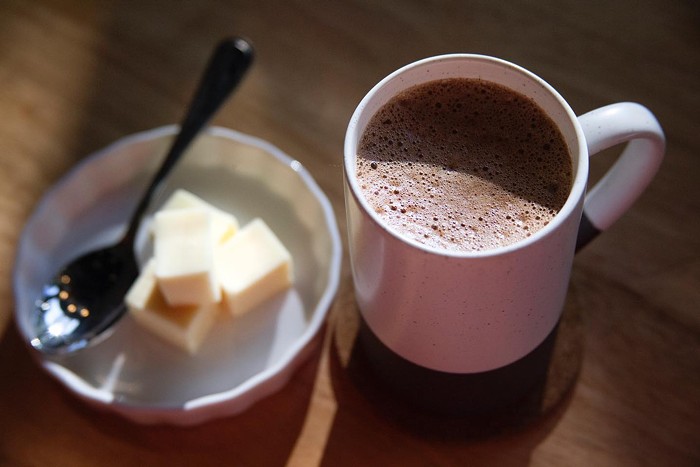
My daughter and I weren't exactly regulars, but we were regular enough that the servers knew our usual order by heart: short stack, bacon, eggs scrambled dry, side of hash browns, toasted English muffin, coffee, and a hot chocolate (no whipped cream). My favorite time to go is Sunday morning, just before the post-church rush, in time to watch the tables fill up with small, hungry children decked out in their Sunday best.

"You don't cuss in here," says Sims. "You did not cuss in front of your families. People had a code of conduct."

The latest news, though, makes it tempting to spit out a few four-letter words.

The Pottses say they had a deal to purchase the property about a decade ago, but the property owners backed out at the last minute. They'd heard talk for years that Safeway, which sits across the parking lot from the restaurant, wanted to build a gas station on the site, but they say they were never told the property was on the market, let alone given the opportunity to make a counteroffer.

Sara Osborne, the public affairs director for Safeway's Seattle division, says that a confidentiality agreement prevents her from commenting until the sale closes, but she describes her company's plan to demolish the Silver Fork as a "corporate decision based on where we have customers that want fuel."

It's an explanation that doesn't sit well with Sims, who says he plans to boycott that Safeway location. "They just lost my business," says Sims. "I won't patronize a store that would do that to a cornerstone of the community."

Sims has had complaints about Safeway underserving minority communities since he first moved to the area in the 1970s, calling Safeway's aging Othello Street store "appalling." A 1990 investigation by the Seattle Times found that store—in one of Seattle's poorest neighborhoods—had some of the highest prices in the city, describing it as "totally outdated... [with] old fixtures and small departments with no service."

Safeway has since built two "superstores" on Rainier Avenue South, and the Othello store was allegedly renovated a few years back. It got a Starbucks counter—yay—but the cramped, half-century-plus-old building is largely unchanged, and I can tell you from personal experience that the selection and service still falls far short of Safeways located in more affluent neighborhoods.

"It's Safeway sneering at the community, spitting on it," says Sims, still sore from his previous battles with the chain and newly embittered by the news of the Silver Fork's impending closure. "Safeway has never been a community place. Never, ever, in my opinion, has it been committed to the welfare of Southeast Seattle. Ever. They are telling everybody in the New Holly community: 'We don't care about you. But we'll take your money.'"

"Othello is certainly on the top of our minds," counters Osborne in defense of Safeway. "But you don't want to invest too much in a store that is already standing when it is under consideration for a new replacement store in the same community in the future."

As for the Silver Fork, can anything be done to save it? "I don't think there's anything legal to do to stop it," says Seattle City Council member Bruce Harrell. Harrell says he has reached out to the Potts family, offering to help them find the diner a new home and the financing to build it. "They have a recipe that works," says Harrell, and he's confident they could duplicate their success elsewhere in the neighborhood.

But is there time? Osborne says she thinks the permitting and planning process could take from six months to a full year, maybe longer. In the meanwhile, says Osborne, "I would think that we would want a tenant." And that at least suggests an opportunity.

While the city's comment period was set to close on August 22, it's Safeway where public pressure would likely best be applied. Osborne says she wants to talk to the Potts family, and you can e-mail her, too, at Sara.Osborne@safeway.com. Sims's cynicism aside, perhaps Safeway can be convinced that the ill will generated by demolishing the Silver Fork is not worth the profit from a new gas station. Or maybe corporate headquarters can at least be convinced to extend the Silver Fork's lease long enough to give the owners time to explore their options.

Either way, now is the time to let Safeway know that the Silver Fork is more than just another greasy diner. recommended

Agree with this review? Disagree?
Write your own damn review.
 

Comments (15) RSS

Oldest First Unregistered On Registered On Add a comment
gloomy gus 1
The Times sent Heffter to do a story and she reported the owner was thinking of closing anyway, and doesn't particularly want to stay in that spot even if Safeway doesn't buy the land:

A community effort to save The Silver Fork restaurant is in full swing, but the restaurant's owner said she was thinking of closing it anyway.
"I was relieved when I found out, to be honest," said Johnson, 51, who took over running the restaurant from her ailing parents five years ago. "It's been really, really, really stressful for me, doing this."
Johnson's mother, Estella Potts, opened The Silver Fork in March 1989 after years of operating a diner in the Central District. There was talk about a decade ago of buying the building, at the corner of Rainier Avenue South and South Charlestown Street, from the family that owns it, but the decision was to stick with a lease.
[...]
Johnson plans to meet with Safeway representatives, at their request. She doesn't blame them, she said. Why wouldn't they want to expand their business? That's what they do.
The grocery chain says the gas station is not a done deal, but the property has been on the market for two years. Safeway spokeswoman Sara Osborne said the company was told Johnson planned to retire.
"We don't want to buy a property and then evict somebody who wants to be there," she said.
The sale is not complete. The Seattle Department of Planning and Development is accepting comments about the gas-station proposal through Wednesday. A gas station is consistent with the land's commercial zoning, said spokesman Bryan Stevens.
The property's owners could not be reached Friday. Johnson is upset she didn't know sooner about their plans to sell. Still, she doesn't want to stay in the restaurant's current location.
She would consider moving, she said, "but only if it's beneficial to me."
"Everybody's pushing me to keep it open, but ... I don't know if I would want to stay here if Safeway did back out," she said. "I understand everybody wants to have The Silver Fork. It has made me feel so good, because what has kept me coming here seven days a week ... is my customers."
http://seattletimes.nwsource.com/html/lo…
More...
Posted by gloomy gus on August 22, 2012 at 9:26 AM · Report
2
G.G., Goldy talked to Ms. Johnson after the Seattle Times piece ran—see paragraph three:

"...The Pottses' daughter Margie Johnson, who's been running the restaurant since her mother's stroke, recently told the Seattle Times that she'd been thinking of closing the restaurant anyway, but she tells me she would put in another 15 years, even relocated. 'I love this place,' says Johnson. 'I don't want to see it go down just like that.'"
Posted by Bethany Jean Clement on August 22, 2012 at 9:42 AM · Report
Goldy 3
Gus @1, Margie certainly has mixed emotions, but I feel that the Seattle Times overemphasized the negative ones. Margie told me that she had been considering closing the restaurant, maybe in another two, three years, and that she wasn't 100% sure what she was going to do. But while she said she was "devastated" when she first heard the news, she did not sound to me like she was ready to give up:

"If I can give it another 15 years I would love to do that, but I have to see how this works out for me." Margie told me on Monday. "I'm really hoping that everything works out, because I really don't want to see the Silver Fork, go this way."

Make of that what you will.
Posted by Goldy on August 22, 2012 at 10:50 AM · Report
gloomy gus 4
@2, 3, thanks for directing me to that part - I read it too fast (while pretending to be working).
Posted by gloomy gus on August 22, 2012 at 11:22 AM · Report
5
"I can tell you from personal experience that the selection and service still falls far short of Safeways located in more affluent neighborhoods."

Service falling short in a store in a less affluent community? Whose fault is that? The store, or the workers?
Posted by TheVripper on August 22, 2012 at 3:05 PM · Report
Goldy 6
@5 It's management's fault. They run the store. Either they're not adequately staffing the store, or they're not holding the staff up to the same standards they would in a more affluent neighborhood, or both.
Posted by Goldy on August 22, 2012 at 4:04 PM · Report
7
Safeway is working with Larkin Potts and Margie Johnson on this matter. We respectfully request that if you want to know Margie Johnson's true feelings about the entire situation, visit the restaurant and ask her.
Posted by SaraOsborne on August 22, 2012 at 4:40 PM · Report
8
GOLDY, you're a decent writer, and I'm sure a nice man, but sheesh, the causes you get after. You're chasing windmills (again) dude; though I'm certain that you chase windmills in a very nice, polite, non-violent, green fashion. Yes, a nice, old spot, but not some embodiment of all that is good in existence. I'm born and raised in Seattle, and nothing is forever, dude. There are other wonderful eating joints, and many more yet to be spawned. Change happens. A Safeway will have much more of a positive economic impact than a nice little diner, in a neighborhood that could use the jobs, although I'm sure that you'll cite a trillion reasons why they're horrible jobs. Yet, nevertheless, they are real, paying jobs, with benefits in a neighborhood that dearly needs them. There will be another nice eating shack. Trust me.
Posted by Wild Bill on August 22, 2012 at 7:05 PM · Report
9
@8

I think one of the things that comes up in the South End (which is where I live) that you don't see in the north/mid parts of Seattle as much is that things don't get replaced by like things. A great, family eating spot will shut down, the lot will stay empty for many years, eventually become new living spaces, a yoga studio, a mid-to-high-end restaurant, none of which are *bad* things, but the South End is still out an affordable place to sit and eat. Its why there's so often an emphasis on keeping what's around-- the idea that "there will be more places that pop up like that one" isn't something we can take for granted.

The Safeway is already there. I don't know how many permanent jobs the gas station will provide-- 2? 4? or whether it will create them or Safeway will simply redirect employees from other stores.

Posted by gi on August 23, 2012 at 1:34 PM · Report
Goldy 10
@8 If you ever visited the area, or even read the article, you'd know that the Safeway is already there. The existing store wants to add a gas station.

Also, you'd understand that the Silver Fork is more than just an "eating shack." It is a cornerstone of the community.
Posted by Goldy on August 23, 2012 at 2:43 PM · Report
11
@8 - The previous commenters are right. The Silver Fork is a very important neighborhood hub that is core to the social fabric of the community. It is where people interact, where life happens - just a great place for people, many of them working class, who live in a neighborhood where many residents (aside from a couple blocks in Columbia City) have been priced out and/or classed out of the Seattle mainstream. New development opportunities are more likely to lead to some corporate gas station or an upscale, hipster/yuppie eatery, or a hot yoga place geared solely towards wealthy gentrifiers.

The Silver Fork served the long-term existing community that has been in the neighborhood for years, along with newcomers and everyone else. All were welcome and the community thrived there. Its loss is truly devastating and makes me wonder just how much longer working-/lower-middle families in Seattle will have any businesses geared towards them.
Posted by g-ballz on August 24, 2012 at 1:29 AM · Report
12
Great article, by the way, but I gotta say the title betrays the real heart of it. "Seattle needs more grits not gas stations" sounds like some ironic hipster cry. As you say, this is about a cornerstone of a community being ripped apart because of a selfish property owner and a cold, calculating coporate entity that has no vested interest in the community and people who live in it.
Posted by g-ballz on August 24, 2012 at 1:35 AM · Report
13
@12: As the editor of the piece, I wrote the headline and kicker, and I can assure you, I do not mean it in any way ironically.
Posted by Bethany Jean Clement on August 24, 2012 at 1:12 PM · Report
14
I live in this neighborhood and shop at the Safeway at least once a week, and yes I'm just a working class guy like those who apparently frequent the Silver Fork. I've also visited the Silver Fork on more than one occasion and I've given up trying to find its redeeming qualities. When I go out to eat, I'm usually not looking for a cornerstone of the community; I'm usually looking for a decent meal in a nice atmosphere with good service. The times I've been to the Sliver Fork I've found none of those things. The food I've had has been mediocre at best, the service consistently bad, and the atmosphere pretty much non-existent. When I have to explain to a waitress how to make iced tea and the only decor was very loud music played from a single speaker behind some sort of partition, the place doesn't meet my minimum requirements for going out for a basic meal. I'm sure I'll be told that I'm missing the point of the place, and that may be. But, it hasn't provided what I need out of the community, and hasn't become a gathering spot for me. If the place moves, it seems as if it could still be the same type of gathering spot.

A business doesn't need to exist in a dirty run-down building in order to maintain community spirit. Look at the Starbucks at 23rd and Jackson; even though it's relatively new, it could easily be considered a cornerstone of that neighborhood. Oh, and it's corporate too. It's the people within a place that make it a community spot, not the fact that they sell grits.
Posted by Grrrwlr on August 24, 2012 at 3:47 PM · Report
15
I have never been there but it's always sad when a good place (restaurant) is going to be replaced with a gas station. They are so many anyway.
Posted by Mobile Marketer on August 25, 2012 at 9:23 PM · Report

Add a comment

Most Commented in Food & Drink