- Goldy | The Stranger
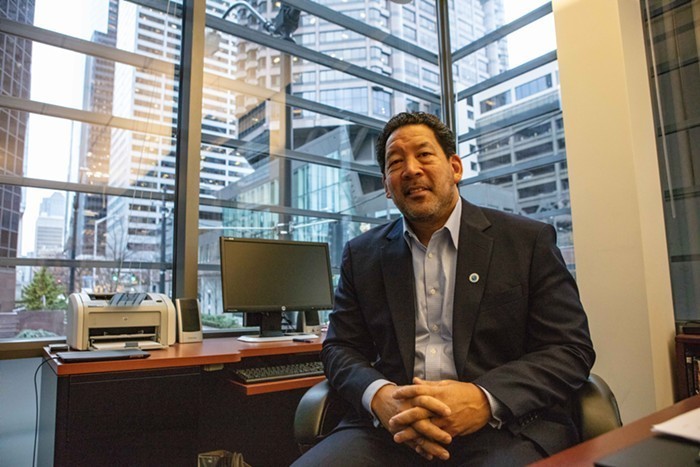
- Attorney General Rob McKenna at a press conference earlier today, just before I tore off all my clothes and made a scene.
Well wasn't that anti-climactic. Shortly after the US Supreme Court released its historic 5-4 decision upholding the Affordable Care Act, mandate and all, I headed down to his Seattle offices to watch Attorney General Rob McKenna eat crow. But after they finally let me into the press conference (more on that tomorrow) I was in for a disappointment. McKenna declared victory. Or so it seems.
"We achieved our goal of defeating the mandate on commerce clause grounds," our state's top lawyer told a confused press corps. "It was a clear victory for federalism."
Really.
Huh. And all this time I thought the lawsuit was about health care reform or something, when McKenna's real goal was just a principled defense of a technical interpretation of the commerce clause. Who knew? (Talk about making lemonade out of a shit sandwich.)
Taken out of context, you might have had a hard time telling which side of the health care lawsuit McKenna was on. If elected governor he said he would move forward with expanding Medicaid and implementing Washington's health insurance exchange. "This is a good model," insisted McKenna. And no, contrary to his party's rallying cry, McKenna said he does not support efforts to repeal the ACA. "The mandate will have to be maintained," said McKenna, calling repeal "completely politically unrealistic."
It was the most miraculous conversion since Emperor Constantine embraced Christianity.
So there you have it. A Republican attorney general who led the charge to overturn "Obamacare" claims victory on the heels of his ill-conceived lawsuit's defeat. If nothing else you gotta admire his chutzpah.