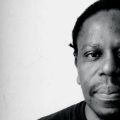
I have two former Village Voice writers to thank for planting in my young mind the idea that writing for a weekly would fulfill my literary ambitions. One is Greg Tate and the other is Joe Wood. The former recently published a collection of writings, Flyboy 2, and is still very much active; the latter went missing on Mount Rainier in 1999 and his body was never found. In fact, if Wood hadn’t vanished, I most likely would have moved to New York City to pursue my writing career.
Then Wood climbed up Mount Rainier to look at birds, probably slipped, probably fell into a crevice, and probably froze to death. The last person to see him was a hiker who passed him on a mountain path. With this sudden death, I lost my main beacon in NYC; and while waiting and looking for other ways into the city, my mother was diagnosed with cancer, sold her interest in a very lucrative restaurant/bar, the Night Shift, located in the heart of Gaborone, the capital of Botswana, and moved to Seattle to spend her last years with her family. When Dan Savage offered me a full-time writing position at The Stranger, my mother insisted that I take it (yes, there was a moment I considered turning down the opportunity), and that sealed my fate. The death of Wood, the persistence of Dan (if you really hate me, blame him), and the encouragement of my dying mother.
Wood did not much care for Seattle; there were not enough black people here for his taste, and he said as much in a 1993 Vibe article called “The Other Seattle.” He thought I was wasting my time in this too-white town and that my real home was with the heady brothers and sisters of NYC. The reason why I mostly agreed with him had nothing to do with Seattle’s scarcity of blacks or NYC’s surplus of them, but because I deeply loved the Big Apple. To move there is to move to the center of the whole human universe. What I wanted more than anything else at the time was the happiness of waking up with the rats, the rattle of train tracks, and the smell of bad coffee.
I’m black, but I was not raised black. I was raised not even as an African. I was raised as a human being. My parents, who grew up in an apartheid system in Rhodesia and beat the craziest odds imaginable to obtain advanced degrees and a house in one of the most prestigious neighborhoods in Harare, Zimbabwe, bent over backwards to shelter me from white racism. They gave me everything I needed and went out of their way to make sure that I never once felt that white people had more or were in any way better than me. My childhood was really post- racial. For me, my sister, and my brother, race hardly existed. Indeed, the only racial incident or crisis that hit my family was when my mother, drunk with the money made from the Night Shift, contemplated adopting a white English kid. My father, who was much more sensitive to racial issues, flatly rejected this idea. The family had to talk about it.
But if you write for a newspaper in a very white city, and that city has not fundamentally broken with the long history of American racism and its brutally obvious spatial and economic consequences, you have to become what you have never really been: black. Those who think that I too often have boiled things down to racism must know that I had no choice in the matter. Writing for The Stranger made me blacker.
These are the types of white readers who forced the blackness out of me. There are the white readers who have the privilege of assuming only they have lived a life of privilege. It does not occur to them that a black person might have attended private schools, had brilliant teachers, and had a pretty magical childhood (lots of bike rides, squash matches, and heady conversations with smart parents and relatives). These types, who always need a talking-to, can’t believe that I’m not Bigger Thomas.
Though these and other types of white readers have made me blacker, The Stranger has, on the other hand, also provided me with a freedom that I might not have obtained at a New York City publication. I’ve written about the philosophy of clouds, the trans-species sexuality of trees, a theory of kissing, the feet of pigeons, feelings related to the accidental killing of certain large animals. I’ve written a lot about race, but I have also written much more about other matters that have nothing to do with being any kind of color. The Stranger is a freak of nature in the publication world.
I do not know what would have happened to me if I had moved to New York City, but I do think it would have been easier not to be black there, simply because the city has a lot more blacks. I think this is what freaked out Joe Wood about Seattle. This ornithological, nature-loving brother would have also had to be blacker here. Black people do not make black people black. It is always white people who do that.