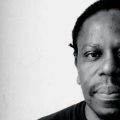
Neal Stephenson
Science-fiction writers are everywhere in the Northwest—they
grow here like some weird, bespectacled fungus. The best of them all is
Neal Stephenson, whose 1995 novel The Diamond Age defined the
cutting edge of science fiction for 10 years after its publication. His
World War II code-breaking novel Cryptonomicon broke into the
mainstream, and he followed that with The Baroque Cycle, a nearly
3,000-page historical adventure that deepened Cryptonomicon‘s
themes of codes and secret histories. Now he’s returning to science
fiction—particularly, the long-stagnant subgenre of space
opera—with his new novel, Anathem. Stephenson’s ambition
always makes his books worthwhile, and we may have no choice but to
celebrate him as a genuine Genius come next September. PAUL
CONSTANT
Trisha Ready
Trisha Ready is writing the meatiest, drollest, most
unflinching/curious/thrilling semiautobiographical long-form narrative
nonfiction in Seattle. The genre used to be called “personal essay,”
but that phrase deserves to die (the essay has feelings? a very long
personal ad?). She is currently pursuing a PhD in clinical psychology
and writing abstract stuff about the relationship between the body and
brain, between the idea and the concrete reality. Though she has
published all kinds of writing in all kinds of places (Mother
Jones, Forbes, Swivel, Exquisite Corpse,
Raven Chronicles), she’s been published a bunch in The
Stranger. Not as much recently , although her excavation of the
wreckage of the current U.S. economy—and her
wandering-down-dark-hallways-of-the-mind about needing things and
having things, about humans being defined by what they choose to buy,
about the house she just sold and the sewer (a kind of subconscious)
she had to descend into before she could sell it—is among the
finest writing The Stranger has been lucky enough to publish
this year. CHRISTOPHER FRIZZELLE
Geologic
Yes, he is the rapper for Blue Scholars. Why did we consider him for
the literary prize? Because Geologic’s raps are crafted with great care
and intelligence. Raw urban documentation is his substance. In this
way, he is a part of a literary tradition that goes all the way back to
Baudelaire, whose poetry documented the major transformations and
primary experience of Second Empire Paris. In “Joe Metro,” Geologic
documents the common experience of using our city’s primary form of
public transportation—the buses of Metro Transit; in “Proletariat
Blues,” he documents the soul-numbing realities of service work in the
post-Fordist economy; and in “The Distance,” he documents the
linguistic and cultural deracination of an Asian immigrant in South
Seattle. And it’s not the cleverness of the rhymes that impresses the
listener, but a wealth of urban details—life in the home, work at
the store, nights wasted in dive bars, and flashes of political rage.
Geologic wants his raps to be a spotless, scratchless mirror of the
daily life of his city. CHARLES MUDEDE