


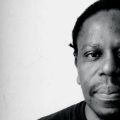
Where to begin with Antony Hegarty? Maybe with his band, Antony and
the Johnsons, who have so far cut three albums and four EPs, have
Manhattan as their home and place of initiation, and have established
an international following that is enchanted by the strange and
theatrical beauty of Antony’s voice, poetry, and music—which can
roughly be broken down into these elements: ’60s soul, ’70s folk-rock,
and ’80s pop. As for Antony himself, he began his life some 30 or so
years ago in the UK, spent a part of his childhood in California, and
finally settled in New York in the ’90s. Here he attended NYU and
participated in an avant-garde theater and music scene that was then
haunted by the voices and visions of singers and actors who had lost
their lives to the “gay plague.” In this sad climate, the aftermath of
the ’80s, Antony shaped his band, his sound, and the central theme of
his tunes, poetry, and theater of the self. In the early 2000s, he
participated in a wonderful disco record, Hercules and Love
Affair, which was released last year; this year, he released a new
album, The Crying Light. The present decade has seen the rise of
his name to indie fame and critical acclaim.
Now that we have established Antony’s beginnings, let’s turn to the
essence of his art and mode. That essence is being between
things—between female and male, between heaven and earth, between
life and death. His voice, sexuality, lyrics, and music are neither
this, feminine, nor that, masculine, but a third that issues from the
space in between these stable sexual codes. But there is more. Antony
does not so much challenge or disrupt the certainty of being one or the
other, but presents the third on its own terms. Antony is not a rebel
in the way that Boy George—a singer he is often compared with
(and has duetted with)—was a rebel. Antony is not shocking, nor
here to cause trouble by exposing masculinity and femininity as mere
social fabrications. That is not his game or goal. Instead of
challenging stable positions, Antony’s androgyny is a kind of opening
of the heart to a problem that confronts us all, the problem of
existence itself.
”Oh, I’m scared of that middle place between light and nowhere,”
Antony sings on “Hope There’s Someone,” the opening track of his second
album, I Am a Bird Now. “I’m only a child, born upon a grave,”
he sings on the fourth track of his third album, The Crying
Light. Always this insistence on the inseparability of life and
death. With Antony, the two are one: One is born in a grave; one is
dying to be alive; one is night and day, light and dark; one is “dust
and water, water and dust.” Antony’s music is far more existential than
sexual, and what it challenges is our habit to place death on one side
and life on the other. Death is absolute and life is absolute, and
there is nothing between them, no third term or moment. A person is
either alive or not. Thousands of years ago, the Eleatics argued that
nothing comes from nothing, and something from
something—something cannot come from nothing. But when Antony
ghostily sings lines like “dust and water, water and dust,” he is
insisting on the impossible: Life is death because death is life. In
other words, no life means no death.
It is not surprising that the cover of The Crying Light is a
terrifying image of the Japanese Butoh dancer Kazuo
Ohno—terrifying because Ohno recalls those ghosts in Japanese
folk stories that appear to be alive but are in fact dead, and
only after having sex with them several times does the enchantment
break and the hero realize that he has been fucking a pile of putrid
bones. The very slowness of Butoh dancing (which resembles
decaying architecture as much as it does dancing) expresses the
ultimate motionlessness of a corpse. Butoh is between the mobility of
life and immobility of lifelessness; it brings to the surface of the
body the grave that is grounded within us, the death that was born when
we were born and that lives for as long as we live. (Ironically, Ohno,
now 102 years old, approaches death immobilized, confined to a
wheelchair.)
Another example of the death/life unity can found on the cover of
I Am a Bird Now, which has an image of transgender Factory star
Candy Darling near the end of her life. The picture was taken by Peter
Hujar, and this is what Antony had to say about the photographer in the
2005 New York magazine article “Antony Finds His Voice”:
“[Hujar] took portraits of New York underground artists, painters,
photographers, writers, drag queens… He was a peer of Mapplethorpe’s,
but where all of Mapplethorpe’s pictures were obsessed with the
perfection of the surface, Hujar’s were obsessed with the essence. In a
way, he says everything I would like to say in a song. His pictures
show someone who is suspended between light and darkness.”
Antony’s melancholy music and theatrical voice also exist between
two other stable poles: laughter and crying. Although he rarely sings
about laughing and constantly goes on and on about crying (“I cry for
daylight,” “When my tears have turned to snow,” etc.), some of his
tunes completely and comically collapse under the weight of his wrought
writing and phrasing—”Kiss My Name,” for example. Other times,
the same writing and phrasing move you to tears—the soulful
“Aeon,” for example. Most often, though, the listener is neither
laughing nor crying but both—a delicate emotional state perfectly
suited to Antony’s explorations of the correspondences of life and
death. 
What a wonderful story. It put me in mind of Antony’s live cover of “If It Be Your Will.” The song lifted out of him as if it was being born at that moment.
I cannot wait for tomorrow night.
Of course, the show is Saturday.
I am a dumb f*ck.
The photo above is a few croppings, a candle and a dead prostitute away from a Caravaggio painting.
I’m off to Itunes to check this out.
Good stuff, Charles. Wish I’d had the funds to pick up a ticket.
It was, simply, one of the finest nights of artistic expression I have ever witnessed. His voice, his humor, his incredible band, the arrangements, the acoustics, everything was just so damn lovely.
Funny. I had only heard his music for the first time two days earlier. I had no idea he was performing here until five hours before the show began. I somehow obtained tickets. I knew not a single song but was absolutley mesmorised the entire evening.
Nice Charles. This is artist is truly a gift and truly gifted. I heard the interview with him on NPR and he was so eloquent and opened me up to a larger way of viewing the world and individuals such as himself, who are immeasurably important contributions to the human race.
I missed his show as I was out of town, but it looks as if others enjoyed his lovely spirit and devastatingly beautiful voice.