

Slavoj Zizek is the most popular philosopher of our day. In his work,
we primarily find the influence of Jacques Lacan, Karl Marx, and Georg
Hegel. We also find many references to the filmmaker Alfred Hitchcock
and the writer Gilbert Chesterton. We also find that almost nothing on
earth is alien to his mind. Everything can be grasped and processed by
his muscular theory machine.
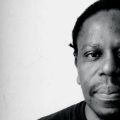
Zizek looks like a bear.
The philosopher was born in what was then (1949) a part of a strange
complex called Yugoslavia, and is now a simple and small country called
Slovenia. Because his country was once committed to realizing on earth
a people’s paradise, Zizek still has strong feelings for the specter that
once haunted all of Europe—communism. Shortly after his country
became independent in 1991, he revived Plato’s dream of the philosopher
king and ran for the highest office in his country. Unsurprisingly, he
lost.
To the question of his private life, judging from his very many
books (and the repetitions in those books) and the recent documentary
about him, ZIZEK!, one has to answer that the public Zizek is
surely not that different from the private one. Indeed, the most
brilliant scene in the documentary is of the philosopher in his bed,
naked, blanket up to the bottom of his hairy chest, back on the
headboard, theorizing to the camera on some difficult matter concerning
19th-century German thinking.
When Zizek speaks, his tongue slicks and slides many of the words that
exit his mouth into a near panic. But let’s not get into that. Let’s
turn instead to his new book, Violence, which is a part of
Picador’s paperback series called Big Ideas/Small Books. Those who are
familiar with Zizek’s work will find nothing new in this brief and fast
examination of violence. There are lots of jokes, lots of references to
Hollywood flicks (World Trade Center, The Fugitive, Children of Men, and so on), lots of
digressions and ideas that are dropped as quickly as they are picked
up. Some chapters are brilliant (particularly “Divine
Violence”—in itself a masterpiece of contemporary thought), some
are very messy, and the whole book is readable. Not once does he
descend into the depths of difficult theorizing. Indeed, if you have
never read this philosopher, this is a great book with which to enter
his comic/cosmic/communistic world.
Also in the book are some of Zizek’s favorite
commodities—products that are repeatedly caught in the web of his
philosophy. I must list three:
On page 21: “chocolate laxative.” It’s available in the U.S. and
advertised in this manner: “Do you have constipation? Eat more of this
chocolate.” What he finds fascinating about this product is that it
makes you eat “the very thing that causes constipation in order to be
cured from it.” Like Diet Coke and decaffeinated coffee, the “logic of
chocolate laxative” is a product that undoes itself. And Zizek believes
that this kind of commodity (“one through which we get the desired
result without having to suffer unpleasant side effects”) is the
ultimate commodity of our age. The products of the 21st century are
more and more becoming nothing.
On page 130: “Tuscany fries.” These are available at a restaurant
near the University of Illinois in Champaign. This is how Zizek
discovered them:
This commodity is related to the “rose of Muhammad,” the name the
Irani government picked for “Danish pastry,” in response to the
offensive Muhammad cartoon that was published in the Danish daily.
Finally, on page 167: “wind-free beans.” This product, which may not
yet be on the market, was developed by scientists in Venezuela.
“Through genetic manipulations,” writes Zizek, “the [scientists]
succeeded in growing beans which, upon consumption, do not generate
bad-smelling and socially embarrassing wind.” This type of bean is, of
course, related to the “chocolate laxative”—it’s a product that
undoes itself.
With all of his digressions, jokes, knowledge of junk/popular
culture, is Zizek precisely not like these products that negate
themselves? Isn’t he a philosopher who undoes himself? He is a
philosopher without the unpleasant side effects of
philosophy.

Slavoj Zizek reads Mon Sept 8, Town Hall, 7:30 pm, $5.
What is the point of a modern-day philosopher? Who cares about this tripe? Philosophy solves nothing; just be, as the animal we are.
Well, gee, I care. He has something interesting to say that can help me find a new perspective on life.
So to say that it solves nothing… well. “The animal that we are” likes to philosophize.
I have attended one of Zizek’s “lectures”. Sure, his enthusiasm and histrionics, his explosive spitting-while-talking, and his enormous gifts at free-associating ideas are impressive and make for a compelling live show.
The problem is that inevitable, didactic, boring, “small-minded” questions arise as soon as he’s done performing: “what have I learned?”, “What on earth did he argue?”, “Is any of it relevant?”, “Is this anything other than intellectual charlatanism?”. These are the questions that came up to me. But the again I’m a boring grad student interested in learning something.
I couldn’t disagree with Godda more. We are animals, yes, but with the capacity for knowledge and reason and above all, spirit. What better way to try to attempt to understand ourselves than to philosophize? Thanks Charles, for this information- I will be investigating more of his Zizek’s work. I agree with Stephen- new perspectives help me understand just what it is to be human.
Chocolate makes me go poop. His whole shit is fucked up.
“With all of his digressions, jokes, knowledge of junk/popular culture, is Zizek precisely not like these products that negate themselves? Isn’t he a philosopher who undoes himself?”
Is this a Hall of Mirrors or what? Just kidding, Charles. But I am saving up in case your office ever has a yard sale.