


Ah, youth. That special time when a lad can spend countless hours
honing his guitar- and piano-playing skills and exploring the splendors
of minimalist composers, free jazz, ’60s psychedelia, drone, myriad
ethnic music, and the innovative folk guitarists who recorded for John
Fahey’s Takoma Records.
That’s not how you spent your youth? Huh. Well, while you
were squandering your adolescence on video games, TV, sports, internet
porn, and meaningless hookups, English guitarist/pianist James
Blackshaw was busy becoming one of the most accomplished musicians on
the instrumental head-music scene.
Born in London in 1981, Blackshaw has loosed a profusion of sublime
releases since 2004, both under his own name and in collaboration with
Jozef van Wissem in Brethren of the Free Spirit. He could retire now at
age 27 and still saunter into the pantheon of all-time solo-guitar
greats.
On albums such as The Cloud of Unknowing, Litany of
Echoes, and Sunshrine (all available on Tompkins Square),
Blackshaw creates mellifluous, meditative compositions imbued with a
deep spiritual quality that suggests a pastoral sort of yearning. It
seems as if his aim is to cast a spell on the listener, to induce
peaceful feelings. But Blackshaw denies such utilitarian ends; nor does
he have the listener in mind when he straps on his 12-string, tickles
his piano, or picks up his glockenspiel or cymbala.
“I think if I was trying to make music to intentionally induce
feelings in others, that would be kind of manipulative and insincere,”
Blackshaw writes via e-mail from London. “All I can hope to do is write
things that move me or seem relevant in some way and hope that other
people pick up on that, experience something similar. It’s a kind of
catharsis, for sure, playing these pieces. But while I’m writing, it’s
almost like I can’t even consider the end result and what that might or
might not achieve. The process is almost as important.
“I also think that the pastoral/spiritual quality you speak of is
almost born out of a life that feels opposite to that. It’s a dream of
sorts. I’m a city kid, and my mind and my feelings are often quite
turbulent and mixed up, and it’s a little way of coping with that.”
While Blackshaw’s guitar style has its florid moments, it is rooted
in the Fahey/Robbie Basho school of wringing maximal emotion from
economical fingerpicking. One can also hear the hypnotic repetition of
Charlemagne Palestine and Philip Glass in Blackshaw’s work. Clearly,
Blackshaw favors le note juste over flamboyant virtuosity.
“[Minimalism] just made a lot of sense to me, still does,” Blackshaw
says. “I think my earliest exposure to that stuff was probably
something weird, like hearing Philip Glass’s music used in a TV
commercial or something. It’s funny how little bits of something that
was once considered incredibly difficult and subversive and not widely
accepted have crept into the mainstream over the last couple of
decades, and half of us are probably not even aware of it.
“I will say that I can’t bear pretentiousness and art that seems
obtuse and difficult purely for the sake of it. A lot of noise and
improv stuff feels like that to me. But the composers who are cited as
being minimalists or downtown—Reich, Glass, Young, Chatham,
Palestine, Riley, Monk, etc.—most of their music just seems very
sensuous and ecstatic to me: in repetition, in its length, in the
exploration of simple tone, and in drawing on a wealth of different
musical traditions from gamelan, African music, rock, European
classical music, etc. There is something very hypnotic and moving about
the music those people and many others like them have made.”
In addition to those traits, Blackshaw strives—and
succeeds—to achieve a kind of placelessness with his music; he
aims to write songs whose geographical origin is untraceable.
“I like ambiguity,” he admits. “I guess I’m influenced by a lot of
stuff, and it all ends up in one big melting pot. I’m also terrible at
copying styles or other people’s music and sounding authentic. I think
even if I tried to write a piece that sounded like it was from
somewhere or some specific time, it’d end up sounding like something
else entirely.”
Blackshaw’s prodigious productivity continues apace in 2009. He’s
working with goth-folk occultists Current 93 and collaborating with
multi-instrumentalist David Coulter (who’s worked with the Pogues, Joe
Strummer, Lydia Lunch, and many others), and further solo recordings
beckon. More immediately, Blackshaw’s next full-length, The Glass
Bead Game, will surface this spring on Michael Gira’s Young God
label.
“It’s a little darker in tone,” Blackshaw says. “More strings, more
accomplished piano pieces, some wordless vocal parts… It just feels
like the next logical step to me, not a huge leap, but I think it’s the
work I’m most proud of to date.”
See? Sometimes youth is not wasted on the young. 
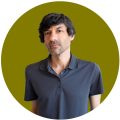
Blackshaw’s music is some of the most fantastically beautiful stuff I’ve ever heard. The Cloud of Unknowing is more gorgeous each time and a definite build on some of the greatest guitar gurus. Thanks for giving the man some much deserved credit, Dave.