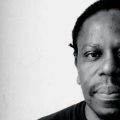
On May 22, DJ Spooky made this announcement to the people on his
e-mail list: “I started out as an artist, and DJing was pretty much
meant to be an art project. I’m hoping over the next year or so to
‘rebrand’ out of DJ culture and continue my art projects.”
Paul D. Miller became known to the world as DJ Spooky. He entered
the DJ world in the mid-’90s by way of New York City’s illbient
movement. The illbient mode was retro-futurism, meaning its adherents
did not look ahead to the future on the horizon but always backward to
versions of the future that were imagined in the past (from the Italian
futurists of the 1910s to the cyberpunks of the 1980s). Illbient DJs
reanimated dead futures with hiphop beats, dub sonic effects, the
hyperenergy of jungle, and electric ambient dreams. Miller was the
leading proponent of this movement, which was organized around the
record label Asphodel and had his 1996 album, Songs of a Dead
Dreamer, as its sole masterpiece. When the illbient movement met
its demise in the late ’90s, Miller survived the death and continued
DJing at clubs and producing a variety of mixes, collaborations, and
compilations.
But of late, Miller’s projects have been happening less and less in
clubs and more and more in universities, concert halls, movie theaters,
and galleries. The last time Miller was in Seattle, in 2004, he
performed at Benaroya with the Seattle Chamber Players. A recent major
work was a visual remix of the Ku Klux Klan movie Birth of a
Nation, which he showed at the WTC site for the 2007 Tribeca Film
Festival, with musical accompaniment by the Kronos Quartet.
This trend—coupled with the fact that from the very beginning, DJing
for Miller has been a medium for his art, his global aesthetics, his
Afro-futurism—has made it evident that his break with DJ culture was
just around the corner. And his announcement on May 22 was also an
announcement of his newest work at the African Pavilion of this
summer’s Venice Biennale, the digital-media installation New York
Is Now and the sonic mix Ghost World: A Story in
Sound.
That made the break official. And raised the question: Will his
future art projects be better than his past club projects?
Judging from New York Is Now and Ghost World, the
answer so far stands on the platform marked “yes.”
New York Is Now is many things. For one, it’s Africa as
imagined by Dadaist/surrealist artists and filmmakers of the early part
of the 20th century. “I appropriated their appropriation of Africa,” he
explained to me during a short phone conversation several weeks after
the studio visit where I first saw it as a work in progress. In that
way, it is much like Stephanie Syjuco’s Body Double (2005),
which appropriated images of her homeland, the Philippines, from the
Hollywood blockbuster Platoon.
It’s also about New York City as a “global starting point” to the
global spectacle of today. “He starts with the poem ‘Mannahatta’ by
Walt Whitman,” according to the website for the Luanda Triennial in
Angola in 2006, where New York Is Now had its premiere, “and
rapidly moves through a series of architectural invocations that leave
the viewer with a sense of the ‘city.'” It’s the city seen through a
collage of appropriated material, from Duke Ellington’s “Harlem Tone
Poem” to Hans Richter’s Rhythmus 21 and Thomas Edison’s
portraits of the electrification of Coney Island.
But most impressive of all is the sonic mix, Ghost World,
which Miller produced for the Venice Biennale. (You can hear it in
Venice or on his website.) A stew of black liberation speeches, pop
songs, dancehall, French hiphop, classic African music, and modern
jazz, Ghost World stands as the 21st century’s most convincing
attempt to revive Fanonian pan-Africanism, which died with what is
known in postcolonial theory as “the betrayal.”
With the exception of South Africa, all independence movements in
black Africa had their moment of betrayal; Kenya, Ghana, Zambia,
Malawi, Zimbabwe—each was brought low by a dictator who betrayed the
principles of the revolution. The aftermath of this betrayal was the
death of the OAU (the Organization of African Unity) as an idea and
political force. Miller’s mix reanimates those dead ideas and forces,
and they return not as a monster, as Frankenstein’s zombie, as
something that should have stayed dead, but as a renewed
possibility.
The mix reawakens the powerful feelings and hopes that made the
liberation wars in black Africa and the emergence of black
internationalism in the U.S. moments of black greatness. “Digital
Africa is here, and has been here for a while,” Miller wrote about
Ghost World. “This isn’t ‘retro’—it’s about the future.” The
future of Africa is Miller’s next and most important step as an artist.